
Puma Shoes Reviewed: Sport Heritage, Value, and Everyday Style
Puma is the other half of one of sportswear's founding stories, a brand with deep roots in football and running that has reinvented itself as a lifestyle and training brand. This review looks at what Puma offers, where it beats its bigger rivals on value, and where it falls short.
Brand Overview
Puma was founded in 1948 by Rudolf Dassler in Herzogenaurach, Germany, after he split from his brother Adolf, who founded Adidas. The two brothers built rival companies in the same small town, and the rivalry shaped both brands for decades. Puma grew through football — it made boots for World Cup winners and for Pelé — and through running, where its shoes were worn by Olympic sprinters. In the decades since, Puma has become one of the largest sportswear companies in the world, though it remains smaller than Nike and Adidas, and in brand-recognition surveys such as YouGov's rankings it appears as a well-known sportswear brand in Europe and the United States, particularly among football fans and lifestyle buyers.
Puma's modern identity is broader than its sporting roots. It makes running shoes, football boots, training shoes, basketball shoes, and a large lifestyle range, and it has built successful collaborations with fashion designers and celebrities that have kept it visible in street culture. It is a brand that is often the value choice among the big sportswear names: its shoes typically cost less than the equivalent Nike or Adidas, and they are frequently discounted. This review is editorial and independent: Sole & Stride is not affiliated with Puma, Puma has not paid for this review, and nothing here is based on laboratory testing we claim to have done.
Main Product Lines
Puma's running range is led by the Nitro line, built around its nitrogen-infused Nitro foam, which is light, bouncy, and well regarded by runners. The Velocity Nitro is its daily trainer, the Deviate Nitro is its faster, plated option, and the Magnify Nitro is its maximally cushioned shoe. That range is smaller than Nike's or Adidas's, but it is coherent, and the Nitro foam is a genuine strength: it is one of the better foams in the industry, and it has won Puma praise from runners who had previously overlooked the brand. Puma's football boots are worn at the highest level of the game, and its training shoes are a staple of the gym category.
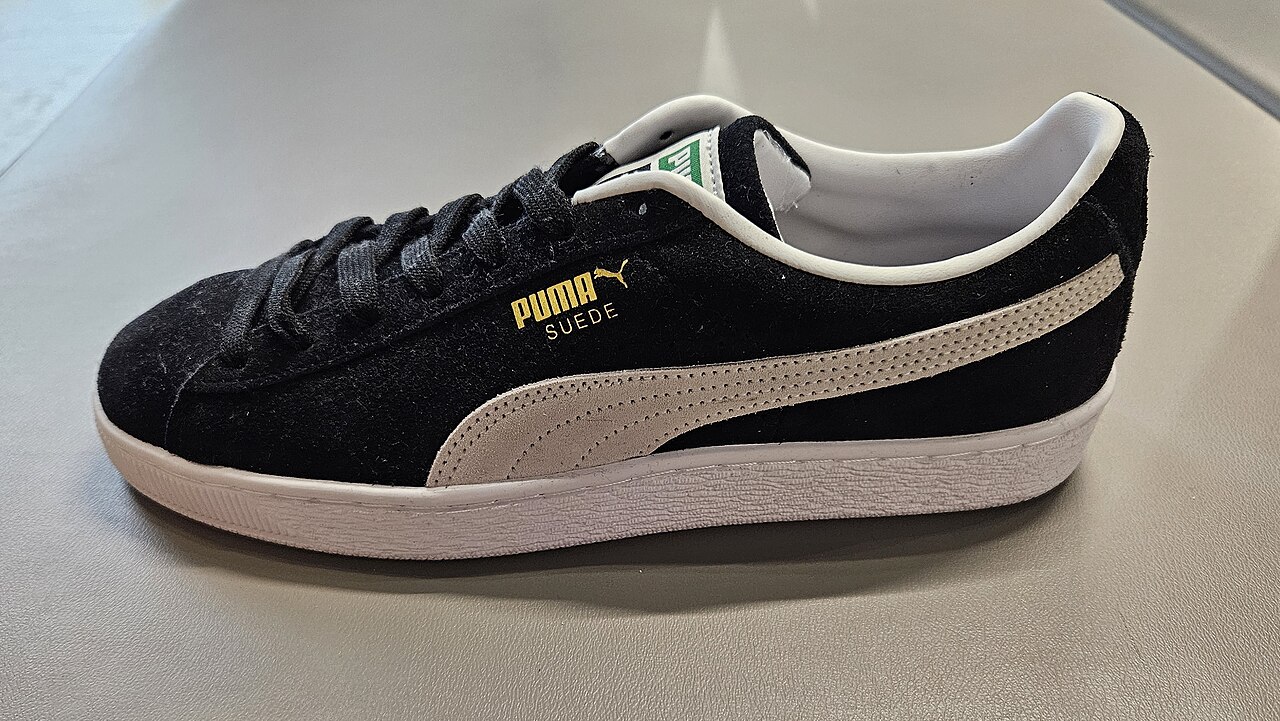
Outside performance, Puma's lifestyle range is led by the Suede, a shoe that has been in production since 1968 and is one of the most recognisable trainers ever made, and by the RS line, the Mayze, and the Cali. Puma also has a basketball range, revived in recent years with signature shoes, and a motorsport-inspired range built around its long association with Formula 1. The range is broad, but it is thinner in specialist categories than the biggest brands: Puma has a small trail range and a small walking range, and a runner with a very specific need may not find a Puma shoe for it.
Strengths
Puma's greatest strength is value. Its running shoes are typically priced below the equivalent Nike or Adidas, and they are often available at a discount, which makes Puma one of the best value options in running. The Nitro foam is a second strength: it is light, responsive, and durable, and it makes Puma's daily trainers feel more premium than their price suggests. The brand's lifestyle shoes are also a strength: the Suede is a classic that works with almost any casual outfit, and it is well made and comfortable for everyday wear.
A third strength is fit for many people. Puma shoes are generally built on a medium last that suits a wide range of foot shapes, and the brand offers a reasonable range of sizes. Its shoes are also widely available, including in stores that do not stock specialist running brands, and its customer service and returns are generally good. For a buyer who wants a good running shoe without paying the highest price, Puma is often the smartest choice on the shelf.
Weaknesses
Puma's weaknesses start with range. It has fewer models than Nike or Adidas, and its range changes more often, which makes it harder to find the same shoe twice. Its stability running shoe range is thinner than its rivals, so runners who overpronate may struggle to find a Puma shoe that suits them. Its trail and walking ranges are small, and its shoes are less commonly stocked in specialist running shops, which means expert advice is harder to find. The brand's marketing is also less prominent than its rivals, which matters less for the shoe itself but means there is less independent reviewing and testing of Puma shoes to draw on.
Durability is a mixed picture: the Nitro foam lasts well, but some Puma uppers and outsoles wear faster than the equivalent Nike or Adidas, particularly in the brand's cheaper models. Sizing is inconsistent between models, as it is for most large brands, and some models are reported as running small, which makes trying before buying important. Prices are generally modest: daily trainers typically around $100 to $140 as of November 2026, racing shoes typically around $160 to $220, and lifestyle shoes typically around $60 to $110.
| Line | Typical use | Typical price range |
|---|---|---|
| Velocity Nitro (daily trainer) | Daily running | Typically around $110–$140 |
| Deviate Nitro (plated) | Faster runs, racing | Typically around $160–$220 |
| Magnify Nitro (max cushion) | Easy miles, recovery runs | Typically around $120–$150 |
| Suede Classic (lifestyle) | Casual everyday wear | Typically around $60–$80 |
| RS / Mayze (lifestyle) | Casual everyday wear | Typically around $70–$110 |
Who Puma Suits — and Who It Does Not
Puma suits runners who want a good daily trainer at a fair price, and who are willing to try a brand that is less prominent than Nike or Adidas. It suits footballers, for whom Puma boots are a standard choice. It suits anyone who wants a classic lifestyle shoe — the Suede is one of the best-looking and best-value casual trainers available. And it suits buyers who value lightness and responsiveness in a running shoe, because the Nitro foam delivers both.
Puma suits less well runners who overpronate and need a stability shoe, because the range is thinner there. It suits less well people who need a specialist shoe for trail running or for all-day walking, because those ranges are small. And it is a poor choice for anyone who wants the reassurance of a shoe that is stocked everywhere and reviewed everywhere: Puma is less visible than its biggest rivals, and finding advice and stock takes a little more effort.
Editorial Conclusion
Puma is the value pick among the major sportswear brands: a good running shoe with a genuinely good foam, at a price below its rivals, and a lifestyle range led by a true classic. Its weaknesses — a thinner range, less visibility, and inconsistent sizing — are real but manageable, and they matter less than the value. If you are buying a daily trainer and you have not tried Puma, it is worth a try. For help choosing, see our running shoe buying guide, our cushioning technology guide, and our sizing guide. Compare with our reviews of Adidas, Nike, and Jordan.
Image credit: Puma Suede trainer, photographed by LeDroider, licensed CC0, via Wikimedia Commons. Source: https://commons.wikimedia.org/wiki/File:Puma_Suede.jpg
